Selected Work
“Jason’s wide scope of professional experience makes him one of a kind.”
— Zahid Buttar / CEO / Epic Sports Marketing
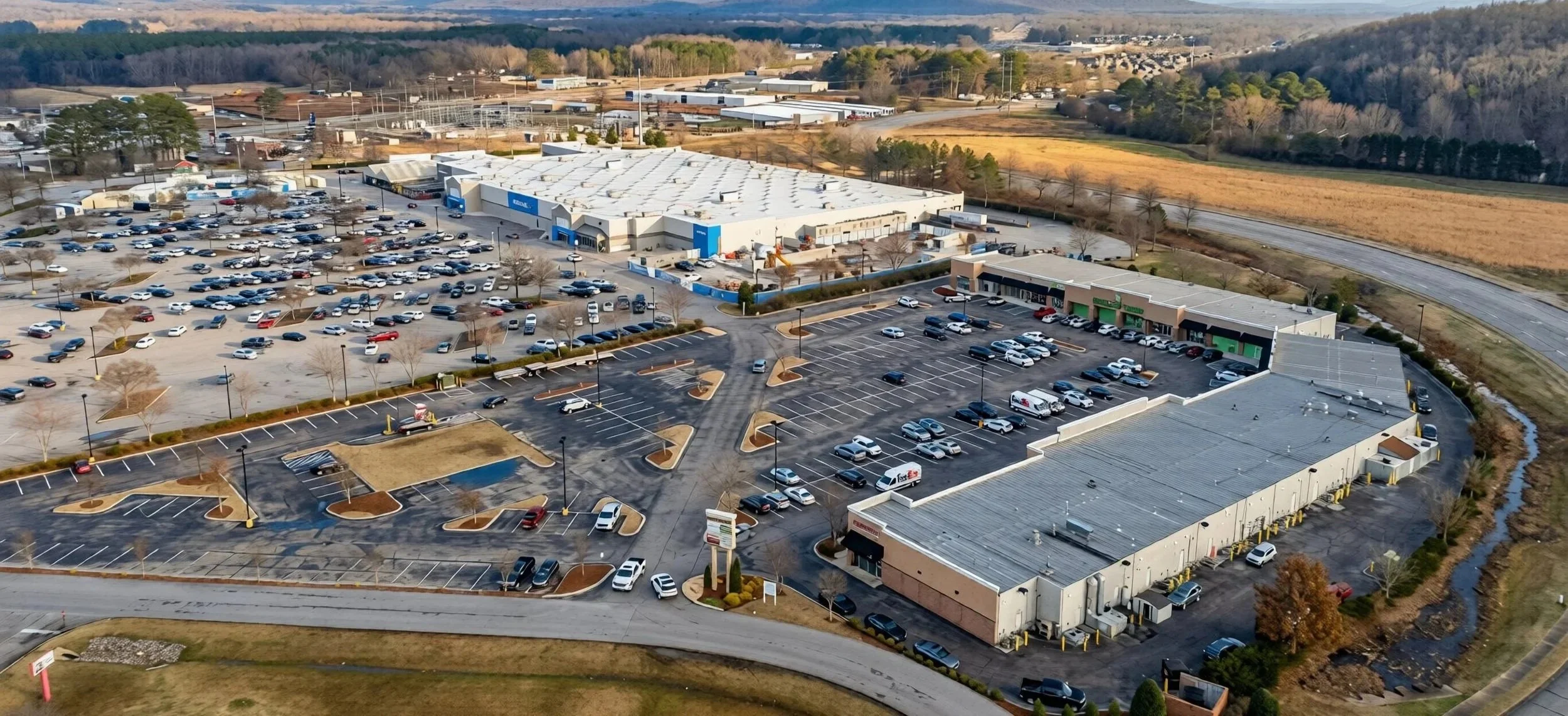
Prudent Growth Partners, LLC
Chapel Hill / Charlotte, NC
THE CONTEXT
After 20 years of leadership in the nonprofit sector, I made a significant industry transition into private equity commercial real estate, joining a growing investment firm as Director of Communications and Community Engagement. I entered an unfamiliar industry with a familiar mandate: understand the organization, build trust, communicate clearly, and help people and systems work together more effectively.
As the company grew from 6 employees to 30 across Chapel Hill and Charlotte, North Carolina, my responsibilities expanded quickly. I was promoted to the C-suite, where my role evolved well beyond communications to encompass administration, human resources, technology, organizational transformation, and strategic leadership.
THE CHALLENGE
Rapid growth was creating new levels of organizational complexity. Systems and processes that worked for a five-person company needed to mature as the business grew. A growing team required stronger administrative infrastructure, more intentional employee development, expanded HR capabilities, better technology, and consistent communication with an investor base of more than 500 people. The challenge wasn't simply to manage growth. It was to help build the organizational infrastructure necessary to sustain it.
MY ROLE
As a member of the executive leadership team, I worked across functions rather than within a single department. My role sat at the intersection of people, operations, communication, technology, and organizational strategy.
I provided executive oversight of administrative and HR functions, led communications and public relations, supported investor relations, helped develop employees and leaders, and worked closely with the COO on technology, systems, and operational improvements. In many ways, my responsibility was to continually ask: What does the organization need next in order to operate effectively at the level it is becoming?
THE WORK
I helped build and manage the administrative infrastructure supporting a company that grew sixfold, while developing systems and processes designed to create greater consistency, accountability, and operational efficiency.
I provided strategic leadership for HR operations serving 30 employees, including payroll, benefits, wellness initiatives, community engagement, and professional development. I also led the firm's external communications and public relations across web, social media, editorial content, and videography, maintaining consistent messaging while generating an average of approximately 1,600 monthly web views and 2,300 cumulative social interactions.
On the investor side, I managed communications and relationship systems supporting 500+ investors, using CRM and investor management platforms to coordinate acquisition announcements, investment publications, fund updates, market analysis, and quarterly reporting.
I also partnered with the COO on the administration and continued development of the firm's technology ecosystem, including workflow and task-management systems, collaboration platforms, and eventually the organization-wide adoption and integration of AI into everyday work.
THE IMPACT
What began as a communications role became an enterprise leadership role supporting nearly every dimension of a rapidly growing organization.
Over the course of that journey, I helped the company transition from the administrative needs of a five-person entrepreneurial firm to the more sophisticated people, communication, technology, and operational infrastructure required by a 30-person organization.
Just as importantly, the experience demonstrated something that has become central to my work today: sustainable growth isn't created by strategy alone. Organizations grow well when their people, communication, systems, and administration scale and grow with them.
Camerakidz, Inc.
The Carolinas / Virginia / Tennessee
THE CONTEXT
After nearly 20 years in business, Camerakidz had built a successful company and established a presence in its industry. But like many mature organizations, the business had reached a point where what had worked historically wasn't necessarily what would carry it into its next chapter.
I was introduced to the owner through a professional referral and brought in as a Principal Advisor to provide an outside perspective on the organization, its operations, people, brand, and opportunities for growth.
At the same time, another important transition was underway: the founder was beginning to think intentionally about succession planning and transferring leadership of the company to his daughter, who would eventually become CEO.
THE CHALLENGE
The company wasn't starting over. It was trying to renew what already existed while preparing for what was next.
That required an honest look at multiple dimensions of the business: organizational structure, personnel, workflows, management practices, sales and marketing, brand positioning, communications, and business development.
There was also a larger leadership question underneath the operational work: How do you modernize a 20-year-old company while preserving what made it successful and preparing the next generation of leadership to take it forward?
MY ROLE
As Principal Advisor, I worked directly with the owner and leadership team as an external strategic partner, bringing an objective perspective to both the business's immediate needs and its longer-term direction.
My role crossed traditional functional boundaries. I advised on organizational development, operations, workforce alignment, communications, branding, sales, marketing, business development, and strategic growth, while also helping leadership think through organizational structure and the transition to its next generation of executive leadership.
Rather than simply recommending changes, my responsibility was to help leadership see the organization as an interconnected system and determine where targeted changes could create meaningful improvement across the business.
THE WORK
I conducted an organizational assessment of personnel, workflows, structure, and management practices to identify operational gaps, clarify responsibilities, and uncover opportunities to improve efficiency and effectiveness.
From that assessment, I designed and recommended practical improvements to processes, team structures, roles, and operating practices, helping the company better align its people and resources with business priorities while contributing to improved performance and revenue growth.
I also led a broader rebranding and communications transformation, refreshing how the company presented itself across digital, print, and customer-facing platforms. The work strengthened brand consistency, modernized the company's market presence, and helped increase overall engagement by approximately 50%.
Alongside the operational and brand work, I partnered with the owner on sales, marketing, and business development strategy, incorporating industry research, competitive insights, and market intelligence to strengthen positioning and identify new growth opportunities.
Throughout my time, the work also supported the owner's succession planning and the gradual transition of leadership to the next generation.
THE IMPACT
I was able to assist a successful 20-year-old company in moving from maintaining what it had built to intentionally preparing for its next chapter.
The organization strengthened its internal structure and operating practices, modernized its brand and communications, increased engagement by approximately 50%, identified new avenues for growth, and created greater alignment between its people, operations, and strategy.
Perhaps the most meaningful outcome, however, was the leadership transition itself. The founder unfortunately passed away but successfully handed executive leadership to his daughter, who now serves as CEO and is thriving in the role, positioning the company to continue evolving under her leadership.
For me, the experience reinforced an important principle of transformation: change doesn't always mean replacing what came before. Often, the best transformation honors what an organization has built, strengthens what still works, changes what no longer does, and prepares new leaders to carry it forward.
Springdale Community Church
Louisville, KY
THE CONTEXT
After serving in two executive, second-chair leadership roles earlier in my career, I was given my first opportunity to serve as the senior executive leader of an organization when I became Senior Pastor of Springdale Community Church.
It represented an important transition in my leadership journey. Instead of helping another leader execute the vision, I was now responsible for setting organizational direction, developing the leadership team, stewarding financial resources, strengthening infrastructure and governance, communicating the vision, and ultimately carrying responsibility for the organization's health and future.
During my tenure, the church grew from approximately 185 participants to nearly 1,000, requiring the organization itself to grow and mature alongside the people it served and cared for.
THE CHALLENGE
Springdale had significant potential, but growth required more than attracting people. It needed stronger leadership development, operational infrastructure, financial discipline, care systems, and a strategy capable of supporting a much larger and increasingly complex path forward.
Financial stewardship was particularly important. The church was carrying a sizeable debt service when I arrived, creating both an immediate operational responsibility and a longer-term sustainability challenge. We worked intentionally to manage and significantly reduce that debt while overseeing an annual operating budget and continuing to invest in organizational growth and ministry.
Then, in September 2012, the nature of leadership changed unexpectedly. During a homeowners association meeting being held in our facility on a Thursday evening, a gunman opened fire, ultimately taking the lives of two community members. The shooting became national news and immediately changed our building from a place associated with gathering and worship into the scene of a devastating tragedy.
The organization suddenly faced a challenge no strategic plan could have anticipated: How do you lead people through a crisis while caring for victims, families, staff, a congregation, and an entire community seeking stability and hope?
MY ROLE
As Senior Pastor, I served as the organization's senior executive leader and primary communicator, with responsibility spanning vision, strategy, operations, finances, personnel, governance, organizational development, pastoral care, community engagement, and crisis leadership.
I led a cross-functional leadership team, providing coaching, performance oversight, accountability, and organizational direction, and working to build a culture that supports continued growth.
My role required moving continually between the strategic and the personal, from budgets, staffing, organizational systems, and long-range planning to developing leaders, communicating vision, counseling individuals, and helping people navigate some of the most difficult moments of their lives.
THE WORK
I helped lead the organization through a period of substantial growth and operational development, building the leadership, administrative, and care infrastructure necessary to support its expansion.
I oversaw an annual operating budget of approximately $2.5 million, including financial stewardship, resource allocation, forecasting, and capital priorities. During that period, we also worked strategically to manage and significantly reduce the organization's debt burden, improving its financial position while continuing to invest in its vision and future.
I developed and led a 12-member leadership team, established structured care and counseling systems, strengthened organizational accountability, and created communication and teaching strategies designed to keep a growing organization aligned around a common mission.
The work also extended beyond the organization itself through community engagement and international partnerships designed to broaden its impact. The shooting, however, required those systems and leadership principles to operate under extraordinary circumstances. In the immediate aftermath, we focused on supporting the victims' families and community, caring for our own people, communicating responsibly, cooperating with authorities, and creating space for people to grieve and begin healing.
Rather than retreating after the tragedy, the organization rallied around the community. We sought to be present, compassionate, steady, and useful at a moment when people needed all four. Amazingly, the church grew numerically during this time, with people often citing the organization’s handling of the tragedy.
THE IMPACT
Over five years, Springdale experienced significant organizational, financial, and community growth. Participation increased dramatically, and leadership and care systems matured, and a sizeable debt obligation was significantly reduced. A wonderful leadership team was developed to carry increasing responsibility, and the organization expanded its ability to serve both its local community and people beyond the United States.
But some of the most consequential leadership from that season cannot be measured by growth numbers.
The response to the tragic event and other significant challenges deepened relationships between the church and the surrounding community and demonstrated that the organization could remain calm, compassionate, responsive, and mission-focused in crisis. What could have permanently defined the organization instead became an opportunity to serve people in the middle of it.
That experience greatly shaped my understanding of leadership. It is not simply the ability to create growth when circumstances are favorable. It is the ability to provide clarity when there is confusion, stability when there is uncertainty, stewardship when resources are constrained, and humanity when people are hurting.
Get In Touch
If you're interested in working with us, complete the form with a few details about your project. We'll review your message and get back to you within 48 hours.